The Lexicon of Fear: How Naming Shapes Our Reality
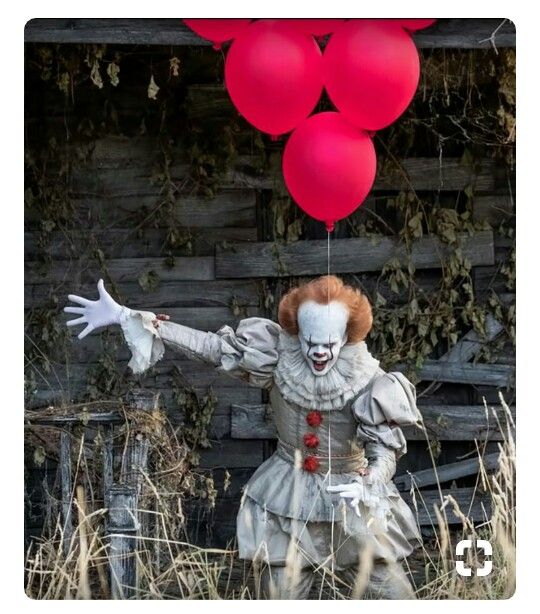
At first glance, when we step into the shadowed corridors of a haunted house or encounter an unknown, mysterious phenomenon, we assume that the external stimulus itself is what triggers a wave of dread and insecurity. Our hearts beat faster, breath catches in our throats, and our nervous systems prepare for action. However, the approach of Word Therapy offers a radically different perspective: We are not afraid of events, darkness, or circumstances themselves; we are afraid of the “interpretation and definition” we assign to those events.
Words are the structural framework of our experience of the world. If we were to observe our inner and outer worlds without the mediation of language, phenomena would remain entirely neutral occurrences, taking on positive or negative emotional weight only through the meaning we ascribe to them.
From the Dark Spirits of Sialk to the Laughter of Halloween
To understand this mechanism, we only need to look at the history of human meaning-making. Imagine the mental framework of ancient communities in places like the historic hills of Sialk or early societies. In those eras, darkness, storms, the unknown, and the boundary between life and death were defined through vocabulary and concepts like “malevolent spirits,” “curses,” and “vengeful forces.” When a phenomenon is encoded with such titles, the mind’s reaction can be nothing short of absolute panic, superstition, and submission.
Centuries later, those exact same fears and symbols were redefined within a different context. In modern culture, Halloween and similar celebrations have migrated—through a shift in vocabulary—from the realm of “superstition and threat” into the domain of “humor, leisure, and play.”
-
Today, ghosts and skeletons are no longer the agonising embodiment of nature’s wrath; instead, they are labelled as “cartoonish,” “fantastical,” and “entertaining.”
-
This shift in the words and narrative surrounding the ritual has transformed what was once a terrifying historical phenomenon into an excuse for laughter, gatherings, and emotional release.
This historical evolution stands as living proof that the essence of the event has not changed; rather, the linguistic and interpretive packaging surrounding it has transformed.
Words: The Architecture of Emotion and Fear
In Word Therapy, words are not merely tools for transmitting messages; they are the bricks that construct our psychological reality. When we label an event as a “catastrophe,” a “threat,” or a “terrifying unknown,” we unconsciously issue commands to the brain that plunge the body into a state of maximum defence.
-
Threat-based language: Negative vocabulary triggers the release of stress hormones and turns the world into a dangerous place.
-
Linguistic reframing: When we learn to change the words used to describe a challenge, the intensity of our emotional reaction naturally adjusts. Paralysing fear transforms into “vague excitement” and eventually into a “solvable problem.”
Mastering the World by Rewriting Vocabulary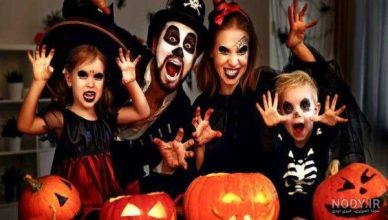
Once we accept that our fears are the direct product of our mental definitions, we gain the most powerful tool for liberation. We cannot control every external event, shadow, or unknown variable in the world, but we possess absolute authority to rewrite their linguistic essence.
Overcoming fear is not an act of fleeing difficult situations; rather, it is the art of renaming and reinterpreting them. Whenever you encounter darkness or a challenge in life that casts a shadow over your psyche, look closely at the words you have constructed for it in your mind before taking any action. Sometimes, a simple shift in vocabulary is all it takes to turn the monster within the mind into a fleeting, harmless guest.